
A Machine That Understands Gold's Nature
Gold is different from other metals, as anyone who has had experience manufacturing it knows. It is soft, easily shaped and pliable under pressure, in ways which steel and brass cannot be. The machinery used for other metals often compresses gold too much, leaves marks on its surface, or does not produce uniform thickness, since the machinery is designed for other metals. Our gold rolling machine was designed from the ground up with exactly that in mind.
This isn’t a repurposed industrial rolling machine with a new label. Every part of the roller pressure, gap mechanism, and frame stability is tuned to how gold actually behaves under load, so operators aren’t fighting the machine to get a clean, even result.
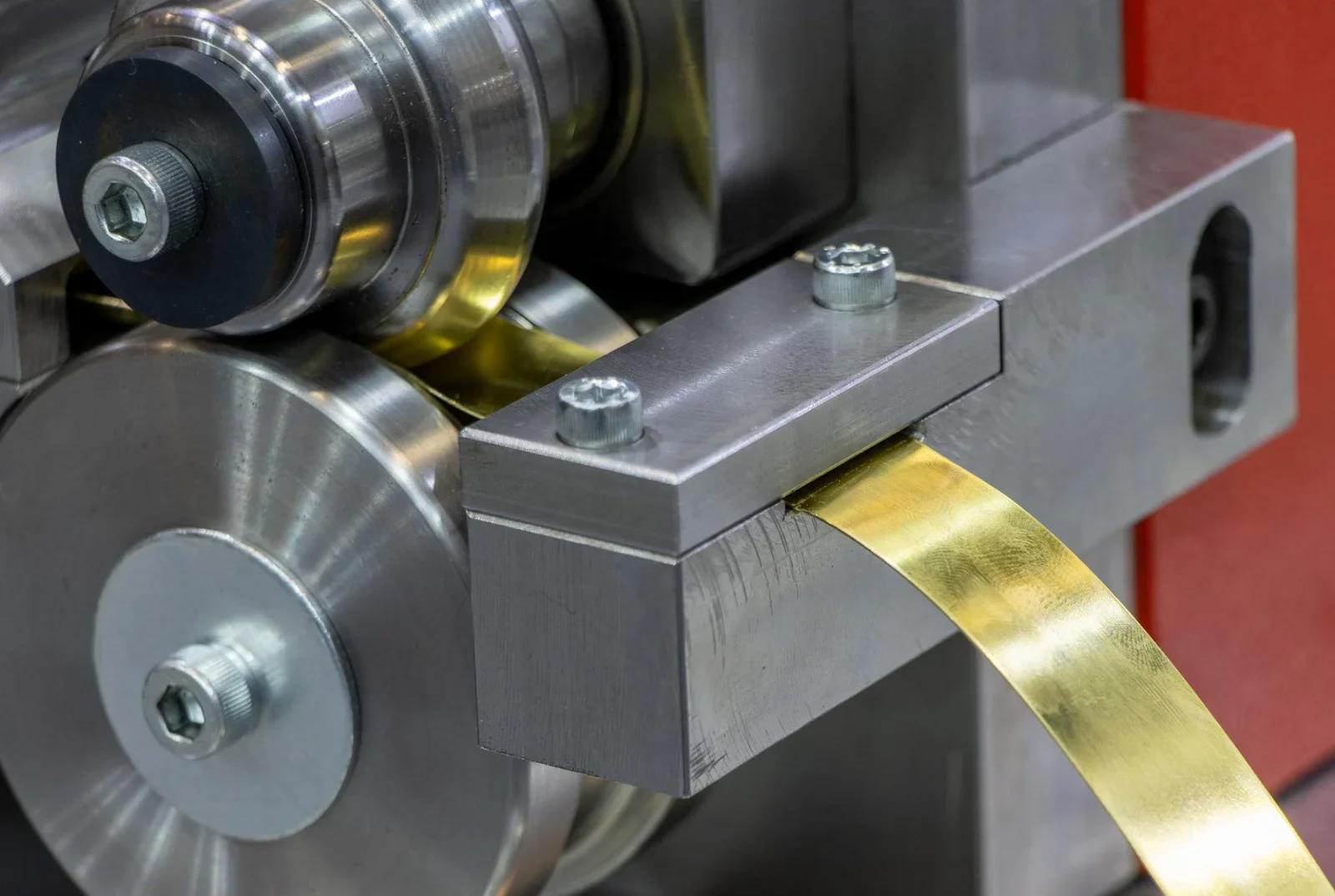
Built for Gold's Softness Without Sacrificing Precision
Gold’s malleability is an advantage in jewellery making, but it’s also a challenge on the production line. Apply too much pressure and you get inconsistent flattening or surface damage. Apply too little and you don’t achieve the thickness reduction you need in a reasonable number of passes. The rollers of our machine are designed keeping in mind the density and softness of the gold. It helps us achieve an appropriate balance and thereby roll the metal efficiently and effectively without having to damage it.
It will be applicable whether we use pure gold in the form of 24K gold or alloy gold. This makes it extremely convenient for the refiners who work with multiple grades of gold in one go.
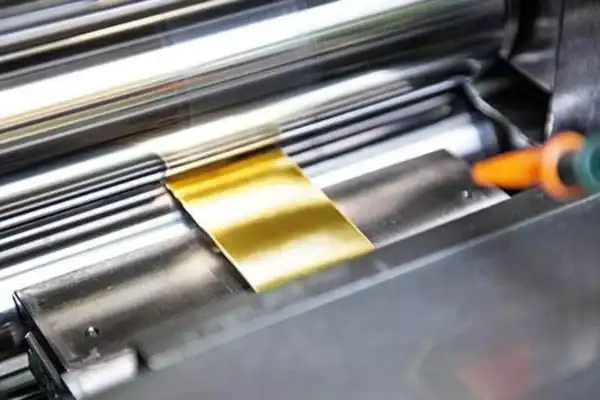
Suited for Multiple Stages of Gold Processing
Not every business using a gold rolling machine is doing final jewellery production. Refiners, bullion processors, and manufacturers producing raw sheet or strip for further downstream work all need rolling equipment that handles gold reliably at an earlier production stage. Our machine works well across these different points in the supply chain, whether you’reproducing rough sheet for later stamping and design work, or fine-rolling gold destined directly for finished jewellery pieces
That range of use is part of why this machine appeals to businesses at different points in the gold processing chain, not just workshops doing final-stage jewellery assembly.
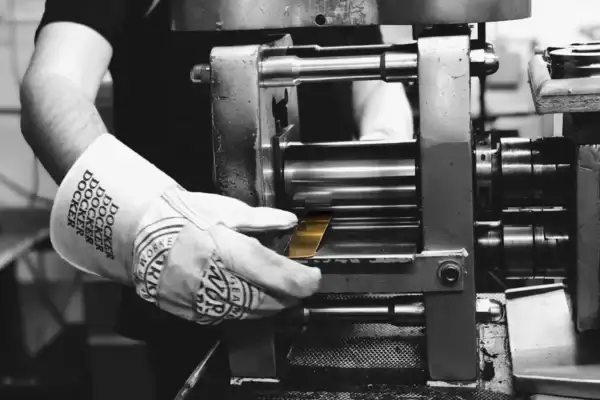
Consistency That Holds Over Time
One of the most common complaints with lower-quality rolling equipment is calibration drift — the machine performs fine for the first few weeks, then slowly starts producing uneven results as components wear. We build our gold rolling machines with hardened components specifically to resist that kind of wear, so the thickness and finish you get in month one still holds up in month twelve.
Manufactured Under ISO 9001:2015 Standards
Every gold rolling machine we produce goes through the same structured quality checks tied to our ISO 9001:2015 certification, covering component sourcing, calibration accuracy, and final performance testing before dispatch from our Ahmedabad facility.
Who Should Consider This Machine
This machine fits gold refiners, bullion processing units, and jewellery manufacturers who need dependable, gold-specific rolling equipment rather than general-purpose machinery adapted for the job. If gold is the primary material running through your production line, day in and day out, this machine was built around exactly that requirement.
Get in touch with our team to discuss your gold purity range, production volume, and which configuration would suit your setup best.
FAQS:
Why does gold need a specialized rolling machine instead of a general-purpose one?
Gold’s softness and malleability require calibrated roller pressure and gap settings that general metalworking machines aren’t built to provide, which can otherwise lead to surface damage or inconsistent thickness.
Can this machine handle different gold purity levels?
Yes, it’s calibrated to give consistent rolling results across various gold grades and alloy compositions commonly used in jewellery and bullion processing.
Is this machine only for jewellery manufacturers, or can refiners use it too?
It’s suitable for refiners, bullion processors, and jewellery manufacturers alike, covering multiple stages of gold processing from rough sheet production to finished rolling.
How does the machine maintain accuracy over long-term use?
It’s built with hardened components designed to resist calibration drift, so thickness and finish quality remain consistent even after months of regular use.